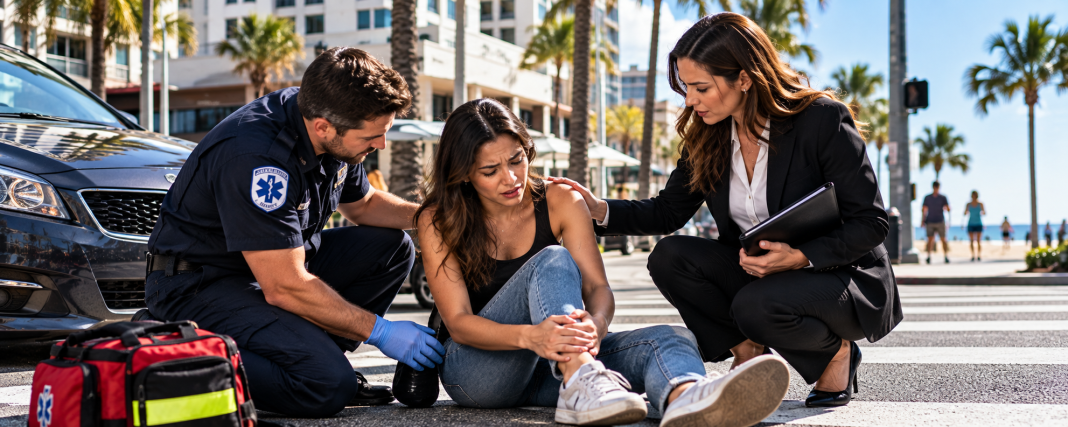

Pedestrian accidents in busy downtown areas and beach communities can involve more than a simple question of who had the right of way. Heavy traffic, crowded sidewalks, crosswalks, parking areas, bicycles, scooters, and distracted drivers can make these accidents legally complicated. The rules governing pedestrian rights and driver responsibilities also vary by state.
Right of Way Does Not End the Analysis
In Florida, pedestrians must follow applicable traffic signals and generally have the right of way when lawfully crossing in a crosswalk. Drivers are also required to exercise due care to avoid colliding with pedestrians. At the same time, pedestrians crossing outside designated areas may have a duty to yield to vehicles.
This means an accident investigation may need to consider exactly where the pedestrian was, what traffic signals showed, whether a vehicle was turning, and what each person was doing immediately before the collision.
Busy Areas Create Additional Evidence
Downtown and beach areas can provide numerous potential sources of evidence. Traffic cameras, storefront surveillance systems, photographs, vehicle dash cameras, witness accounts, and cellphone records may help establish what happened.
Evidence can become especially important when the driver and pedestrian provide different accounts. A video showing the position of a vehicle or pedestrian, for example, may clarify details that are difficult to establish from memory alone. Attorneys handling insurance and injury matters, including those at Jenkins Law P.L., may also examine how available evidence supports the circumstances surrounding a claim.
Injuries Can Be More Serious Than They Appear
Pedestrians have little physical protection when struck by a vehicle. Injuries can include fractures, head injuries, spinal injuries, and other serious trauma. Even when symptoms initially appear manageable, some injuries may require continuing medical evaluation and treatment.
Medical records can help document the nature of an injury, treatment received, recovery progress, and limitations affecting daily activities. Prompt medical attention can also create a clearer record connecting symptoms to the accident.
Fault May Be Shared
A pedestrian’s actions do not automatically determine whether a claim succeeds. Depending on the state, courts may consider whether multiple parties contributed to an accident and assign responsibility accordingly. Florida’s pedestrian laws contain specific rules governing pedestrian conduct and driver duties.
For someone injured in a downtown or beach-area pedestrian accident, preserving photographs, identifying witnesses, obtaining available video, and maintaining medical records can be important. The applicable negligence rules, deadlines, and potential damages depend on state law and the circumstances of the accident.